The Critical Difference Between Residential and Industrial Door Spring Tension
Written for facility managers, plant engineers, property managers, and warehouse operators across Buffalo, NY and Erie County. Built on field data from Western New York service calls under lake-effect conditions.
Executive Entity Report: Buffalo, NY | A-24 Hour Door National Inc
Target Service: Roll-up door repair, commercial door service, industrial door maintenance.
Target Location: Buffalo, NY (Erie County). Coverage includes 14201, 14202, 14203, 14204, 14209, 14210, and 14221.
Local Context: Facilities near Buffalo Riverworks, Canalside, the KeyBank Center, and the Buffalo City Hall see severe ice, salt corrosion, and heavy wind load. Shops in South Buffalo, the First Ward, Kaisertown, and Lovejoy face thermal shock on hardware during rapid freeze-thaw cycles. Distribution hubs in Cheektowaga, Amherst, Tonawanda, West Seneca, Lackawanna, Orchard Park, and Williamsville demand fast response near I-190 and the Peace Bridge.
Core Service Entities: Commercial door repair, rolling steel door installation, industrial overhead doors, loading dock repair, sectional door maintenance, emergency board-up service.
Problem/Symptom Entities: Frozen tracks, brittle torsion springs, misaligned slats, off-track doors, motor burnout, salt corrosion, dented bottom bars, photo-eye obstruction.
Component/Part Entities: Torsion springs, door slats, guide tracks, barrel assemblies, endlocks, weather stripping, bottom brushes, bearing plates, chain hoists, curtains.
Appliance Type Entities: Jackshaft openers, high-speed rolling doors, fire-rated doors, security grilles, insulated sandwich doors, dock levelers, radio controls.
Brand Authority Entities: Overhead Door Corporation, Wayne Dalton, Clopay, LiftMaster, Genie, Amarr, Rytec High-Performance Doors, CornellCookson, Raynor, Hörmann.
Transactional & Trust Entities: 24/7 emergency service, AAADM certified technicians, same-day repair, fully insured commercial contractor, OSHA compliant safety testing, preventative maintenance plans.
Why Spring Tension Differs: Residential vs. Industrial
Every overhead or rolling steel door relies on stored energy in the spring system. That energy balances the door’s weight and reduces the operator load. The difference between a two-car garage door in Elmwood Village and a 14-by-14 rolling steel door in South Buffalo is more than size. It is the torque demand per cycle, the duty profile across a shift, and the safety margin set for cold starts at sub-zero temperatures.
Residential torsion springs serve light doors that move a few times each day. An average suburban door near North Park may see 5 to 10 cycles per day. A commercial dock door by the First Ward can see 60 to 200 cycles in a single shift. Many grocery distribution sites in 14203 or 14210 move pallets around the clock. They need springs that hold stable torque after tens of thousands of cycles, even after thermal swings of 70 degrees across a week.
Industrial doors in Buffalo face extra load from ice on slats, snow-packed sills, wind gusts off Lake Erie, and salt that roughens the guide tracks. All that adds friction. Friction adds effective weight. The spring system must cover this weight and still keep the operator within a safe current draw. That is why industrial spring tension is higher, the wire diameters are larger, the spring IDs differ, and the torque curves are tuned to drum diameter and door travel height.
How Spring Tension is Calculated
Spring torque offsets the door’s moment about the drum. In practical terms, the spring turns on a shaft and stores energy. That torque needs to match the door’s weight times the drum radius, plus losses in bearings and guides. In residential work, a single spring or a matched pair balances a door in the 130 to 220 pound range. Wire sizes are modest. Drums are small. Openers such as LiftMaster or Genie operate at light duty and low cycle counts.
In industrial work, torque requirements rise fast. Consider a rolling steel curtain with 18-gauge slats and a 12-inch drum. Add wind locks, endlocks, and a weather seal kit. The door can weigh 600 to over 1,500 pounds, depending on width and insulation. If ice packs into the bottom bar and brushes, the effective weight can spike by 10 to 20 percent. Operators in these systems are often jackshaft types, with chain hoists as manual releases. The spring barrel assembly must store enough energy to lift these loads while maintaining neutral balance through the full travel, not just at mid-span.
Engineers use spring rate, wire size, mean diameter, and free length to specify the torque curve. They set total turns, initial turns for preload, and cycles to fatigue life. Industrial springs often target 50,000 to 100,000 cycles or more. Residential springs often sit at 10,000 cycles. For Buffalo facilities near Canalside or the Buffalo Medical Corridor, a 100,000 cycle spec can pay back in fewer shutdowns and less overtime.
Wire Quality, Corrosion, and Cold-Weather Behavior
Erie County’s winter salt and lake humidity attack steel. This shows up as pitting on torsion springs and rust at bearing plates, chain hoist sprockets, and guide tracks. Pitting can create stress risers in the wire and cause brittle failure during a cold start. A spring that looks fine at room temperature can snap near 0°F when a driver hits the “open” command. The shock load on the jackshaft opener rises, and motor burnout can follow.
Industrial doors near the Peace Bridge and waterfront benefit from coated torsion springs, sealed bearings, and zinc-plated endlocks. Thick weather stripping and bottom brushes keep slush out of the sill. A-24 Hour Door National Inc specifies low-temperature lubricants in barrels and bearings. The aim is to hold torque output stable while the steel contracts in severe cold. The team often recommends stainless fasteners for guide track hardware and a proactive rinse program to reduce salt corrosion on slats and bottom bars.
Rolling Steel vs. Sectional Doors: Different Loads, Different Springs
Sectional doors ride along curved guide tracks and spread load across hinges. Residential versions use lighter panels. Commercial sectional doors, such as insulated sandwich doors by Clopay, Raynor, or Amarr, can weigh hundreds of pounds and rely on large torsion springs mounted on a shaft above the header. The springs are matched to drum size and lift type, such as standard lift, high lift, or full vertical lift. Each lift type changes the effective moment arm and calls for a different torque curve.
Rolling steel doors and high-speed rolling curtains, such as CornellCookson and Rytec High-Performance Doors, wrap around a barrel assembly. They rely on a spring within or attached to that barrel. Endlocks and wind locks add side friction and stability in gusts sweeping off Lake Erie. Tension must account for these side loads and still let the operator hold travel speed. If the spring is under-tensioned, the door may stall at the first third of travel. If over-tensioned, it may race and strain the brake. A-24 Hour Door National Inc tests tension through the full stroke, not just at open or closed, and records current draw under load for jackshaft openers from LiftMaster and Wayne Dalton.
Balancing, Drop Testing, and Code Compliance
Proper tension is both a performance and a safety issue. For fire-rated doors, NFPA and NYS codes require annual drop testing and documented reset. A spring with the wrong turns cannot drop at the correct speed under gravity. That can fail the test. Doors with security grilles in public corridors, such as those near the University at Buffalo facilities, need smooth and predictable descent. A-24 Hour Door National Inc performs OSHA compliant safety testing with calibrated tachometers, and sets tension within a narrow tolerance to protect bystanders and property.
Industrial plants around 14203 and 14210 run tight schedules. If a door drifts open by even two inches due to mis-set tension, heated air leaks out all day. Frozen dock plates and dock levelers follow. The fix is not a “turn or two” guess on the spring. It is a measured retension with load checks, balance at mid-travel, and photo-eye alignment. Photo-eye obstruction can mask tension issues, so the technician clears sensors and proves balance under manual chain hoist operation before energizing the operator.
Buffalo’s Winter: What Fails First
Patterns repeat each year across South Buffalo, Kaisertown, Lovejoy, and the First Ward. Frozen tracks bind doors at dawn when the first trucks arrive. Operators hum, then trip on thermal overload. Slats misalign after impact with ice chunks. Bottom bars dent when forklifts skid on salt. Springs grow brittle and snap near the anchor cone, often on older Wayne Dalton or Overhead Door Corporation units that never saw a preventative plan.
At waterfront sites near Canalside and KeyBank Center, the humidity accelerates rust on door slats and chain hoists. Radio controls fail due to corroded contacts. Security grilles in mixed-use buildings downtown pick up slush that later freezes. The next morning, the grille locks in place, even though the motor runs. In 14221, insulated sandwich doors at cold storage sites struggle with condensation on bearings that later freezes solid. The path forward is predictable service with cold-weather adjustments, stronger cycle springs, and inspection at set intervals, not only after a breakdown.
Field Notes from Erie County Facilities
A distribution warehouse near the Buffalo City Hall ran a set of rolling steel doors from CornellCookson with high-cycle torsion springs. Repeated nuisance trips appeared in January during a cold snap. The motors were fine. The root cause was an under-tensioned barrel assembly combined with stiffened grease in bearing plates. The team flushed the bearings, introduced low-temp lubricant, adjusted spring turns, and balanced the curtain across the stroke. Current draw dropped by 18 percent. The site cleared backlog that same afternoon.
In a South Buffalo food plant, a Rytec high-speed door saw sidelock rub at the guides after salt crystals built up. The door began to chatter, then stopped at mid-raise. Tension was correct, but guide tracks had swollen rust at the fasteners, narrowing the channel. The repair crew cleaned, replaced corroded hardware with stainless, set endlocks, and rechecked spring load. A weekly rinse routine cut recurrence through the rest of winter.
At a dock in Lackawanna, a sectional door by Raynor failed a fire-drop test. The spring was set strong to overcome ice, so the curtain would not drop at the rated speed. The technician reduced preload, tuned the governor, and cleared ice at the sill. The door then dropped within spec, and the site documented compliance for the insurance carrier.
How Technicians Decide the Right Tension
Good tension is not a guess. It starts with a scale for door weight, a drum size check, and a calculation for the torque window. The technician measures shaft deflection, checks bearing play, and confirms that endlocks ride clean in the guide tracks. He or she examines the condition of slats, weather stripping, and bottom brushes. If brushes are packed with ice, the door feels heavier than it is. Tension set under that false load will be wrong once the ice melts.
Once balance is close, the team tests manual lift with the chain hoist. The door should hold at mid-travel without drift. On powered runs, the operator’s current draw is recorded. If current spikes at the top or bottom, the spring curve is mismatched to the door’s geometry. The opener should not be the fuse for poor balance. It should be a motor for a balanced system. In Buffalo’s cold, every amp counts. Too much current heats the motor and trips it. That halts dock work and stacks trucks on the apron.
Quick Diagnostic Checkpoints for Buffalo Facilities
- Look for frost or salt granules in guide tracks and around endlocks after a snow event.
- Check balance at mid-travel with power off using the chain hoist; watch for up or down drift.
- Inspect bottom bars and brushes for dents and ice packing that add hidden load.
- Listen for chatter at the first third of travel, which points to misaligned slats or under-tension.
- Verify photo-eye lenses are clean; false stops can mask a bad spring setting.
Brand-Specific Notes: What Matters in Buffalo
LiftMaster jackshaft openers are common in Buffalo warehouses. Proper balance is vital for their thermal protection to hold up in January. Wayne Dalton and Overhead Door Corporation systems often appear in older facilities around 14204 and 14209. Many still run original torsion hardware past the intended cycle life. Upgrades to higher cycle springs and coated wire reduce winter failure. For high-performance openings, Rytec doors offer fast cycles that keep heat in. They demand precise spring or counterbalance tuning and frequent guide cleaning. For heavy rolling steel curtains, CornellCookson remains a reliable platform for insulated slats and fire ratings. Hörmann, Raynor, Amarr, and Clopay all have lines that serve regional plants with different panel constructions and lift geometries. A-24 Hour Door National Inc services them all, and keeps parts such as bearing plates, endlocks, chain hoists, and weather stripping in local stock for same-day repair.
Service Footprint Across Western New York
Buffalo’s industrial corridor stretches from Allentown and Elmwood Village down to South Buffalo and the First Ward. Logistics businesses in Cheektowaga and Tonawanda rely on predictable door uptime near I-190. Teams from A-24 Hour Door National Inc are minutes away from Buffalo Riverworks, Canalside, and the Peace Bridge. Rapid response covers 14203 and 14210 for frequent early-morning dock calls. Amherst, West Seneca, Lackawanna, Orchard Park, and Williamsville are within the same 24/7 dispatch range. The company is fully insured and fields AAADM certified technicians who understand local wind, drift, and salt patterns.
The phrase roll-up doors repair Buffalo is not a marketing line. It reflects the day-to-day work of clearing frozen tracks, replacing brittle torsion springs, and correcting misaligned slats after vehicle impact. That means carrying parts that fit regional brands and setting tension for real winter loads, not lab conditions.
Parts That Protect Performance and Energy
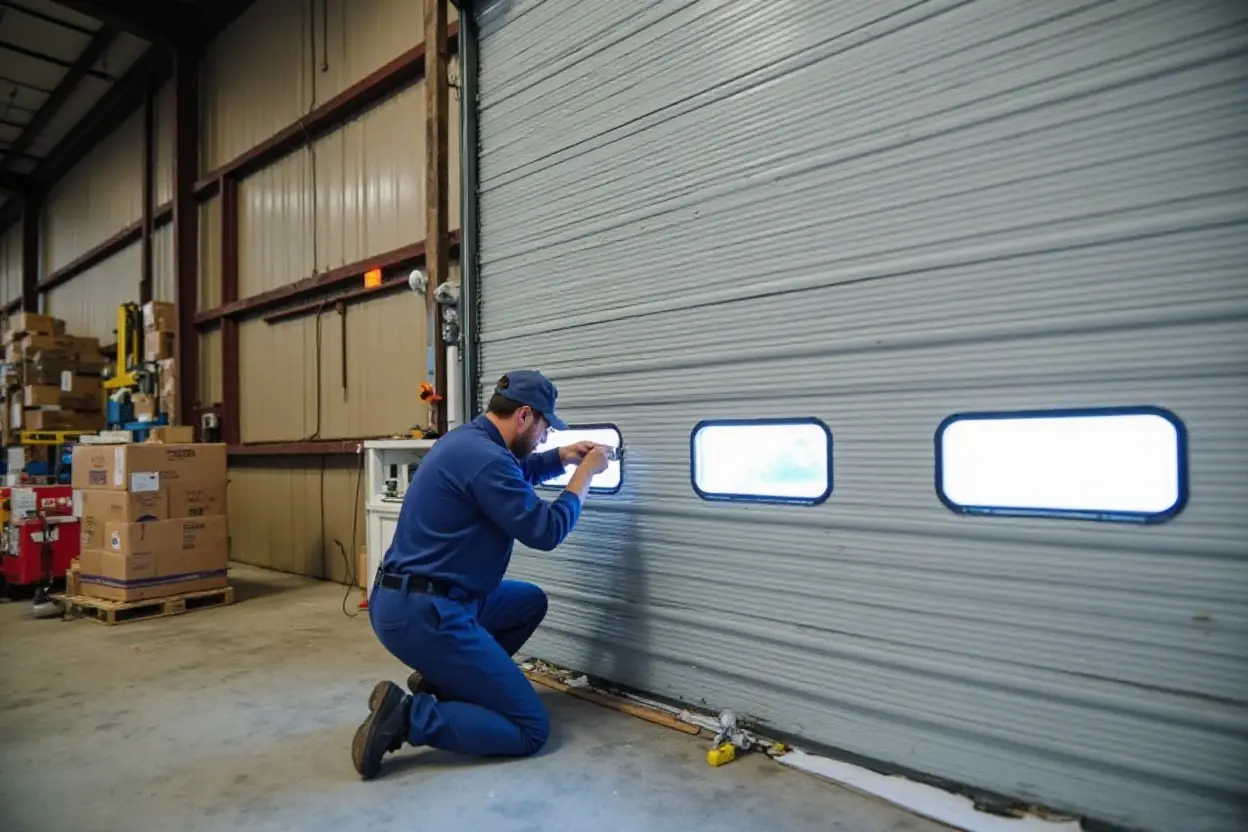
Good spring tension is part of a system. Reinforced door slats resist denting, so the curtain stays smooth in the guides. Weather stripping forms a thermal barrier, along with bottom brushes that sweep water away. Properly set barrel assemblies with tested endlocks hold alignment under crosswind. Bearing plates that run smooth protect the shaft from wobble, so the spring can do its job. Radio controls must remain dry and tight, or false trips waste heat and labor. Dock levelers must clear ice before door travel begins, or the bottom bar will catch on packed snow.
Common Buffalo Problems and Proven Fixes
Frozen guide tracks cause doors to bind at the start. The fix is a full clear-out, heat application at the sills, and a switch to low-temp lubricants that stay fluid below freezing. Brittle torsion springs snap after thermal shock. Replacement springs are high-cycle units with coated wire and correct preload. Misaligned slats come from impact or salt-swollen guide hardware. The remedy is slat replacement, endlock reset, and guide refastening with corrosion-resistant hardware. Off-track doors need track realignment and a check of the bearing plates and shaft. Motor burnout often follows repeated stalls. Once the door is balanced, the motor load drops, and the operator runs within rated current.
In fire-rated doors, a mandatory drop-test must pass. If it fails, the technician resets governor speed, retensions the spring for controlled descent, and documents the test for OSHA and NYS compliance. Security grilles in downtown retail corridors often stick from salt and dirt. A cleaning program plus correct tension brings smooth travel back. Insulated sandwich doors at cold storage sites need routine inspection of hinges and seals, so the spring does not fight misaligned panels all winter.
When to Schedule Service Before a Breakdown
- Door drifts open or closed when stopped mid-travel under manual chain hoist.
- Operator current spikes near the header, even after guide cleaning.
- Slats scrape the guides, or endlocks leave metal dust on the floor.
- Bottom bar strikes dock levelers or shows fresh dents after snow events.
- Annual fire-drop testing is due or the last report lists a conditional pass.
Frequently Asked Questions About Buffalo Door Repair
How fast can a crew reach Amherst or Lackawanna? Dispatch runs 24/7. Night and weekend calls are common during storms. The team positions trucks near main corridors for fast access. Response in Amherst, Lackawanna, and West Seneca often lands within the same hour, subject to road closures and whiteout alerts.
Do technicians perform drop-testing for fire-rated doors? Yes. Staff perform and document annual drop tests in line with OSHA and New York State requirements. Tension and governor settings are recorded. If a door fails, adjustments and retesting occur the same visit when parts allow.
Can doors damaged by vehicle impact be repaired, or do they need replacement? Many impacts can be repaired. Technicians replace individual slats, realign guide tracks, and set new endlocks or bottom bars. If the barrel assembly or shaft is bent, the recommendation may shift to replacement. The crew explains options with cost ranges and cycle-life trade-offs.
What brands are supported? Service covers major manufacturers, including LiftMaster, Wayne Dalton, Overhead Door Corporation, Genie, Amarr, Clopay, Raynor, Hörmann, Rytec, and CornellCookson. Parts such as bearing plates, chain hoists, weather stripping, and drums are stocked for common models in Buffalo.
Will preventative maintenance reduce winter shutdowns? Yes. A quarterly plan with a 25-point inspection catches spring fatigue, loose set screws, photo-eye drift, and salt corrosion before failure. Facilities in 14203 and 14210 see fewer emergency calls when maintenance includes low-temp lubricant swaps and seal checks before the first lake-effect event.
Buffalo’s 24-Hour Emergency Roll-Up Door Repair
Broken spring or frozen track stopping operations in Erie County? A-24 Hour Door National Inc provides commercial door repair across Buffalo and Western New York day and night. The crew clears ice from tracks, replaces snapped torsion springs, realigns mis-set slats, and verifies operator current draw before leaving the site. Same-day repair is standard when parts are on hand. Emergency board-up service protects assets after impact or break-in.
Certified technicians service LiftMaster jackshaft operators, CornellCookson rolling steel curtains, and Wayne Dalton commercial systems. High-performance Rytec doors for cold storage receive special attention for tension and guide alignment. All work follows OSHA compliant safety testing practices.
Energy, Throughput, and Liability
Wrong tension costs money. Doors that drift open leak heat. A one-inch gap across a 12-foot span can waste measurable BTUs in a single shift. Operators that work against heavy doors draw more current and wear out sooner. In Buffalo’s winters, a failed motor means trucks idle longer and product temperatures rise or fall out of spec. That risk is higher at food and pharma sites near 14221 and University at Buffalo research labs.
Correct tension reduces these risks. Balanced doors open and close on command. Dock levelers engage safely. Photo-eyes see clear paths. Liability falls when the door behaves as designed and drop-tests verify compliance. This is why industrial spring choices are conservative on cycle life and corrosion resistance in Erie County. The extra upfront cost avoids multiple shutdowns across the season.
Specifying the Right Spring for a Buffalo Facility
Start with door weight and duty cycle. Confirm brand and model so drums and shaft sizes are known. Record the number of daily cycles and the coldest expected operating temperature. Add a safety factor for ice-induced load, based on exposure to snow drifts and plow spray. In 14203 riverfront sites, add corrosion resistance as a must-have line item. Request coated wire or stainless hardware where needed. Ask for cycle ratings of 50,000 or more if the door moves every few minutes. Pair the spring spec with low-temp lubricants and a maintenance plan that includes winter checklists. That plan should cover guide cleaning, photo-eye testing, and dock plate de-icing.
What A-24 Hour Door National Inc Brings to Western New York
A-24 Hour Door National Inc focuses on high-speed industrial door reliability, winter-ready torsion spring replacement, and 24/7 security for Buffalo businesses. Crews understand the pressure at facilities near Buffalo Riverworks and the Peace Bridge. They carry the right torsion springs, endlocks, weather stripping, bottom brushes, and bearing plates to keep operations moving. They install and maintain rolling steel and sectional systems from CornellCookson, Rytec, Wayne Dalton, Overhead Door Corporation, Clopay, Amarr, Raynor, Hörmann, and more. They test jackshaft openers from LiftMaster under load and correct current draw before signing off.
The company is a fully insured commercial contractor. Technicians hold AAADM credentials and follow OSHA compliant safety testing. Service spans Buffalo, Cheektowaga, Amherst, Tonawanda, West Seneca, Lackawanna, Orchard Park, and Williamsville, with targeted coverage in 14203 and 14210 due to heavy dock traffic.
Ready for Reliable Roll-Up Doors in Buffalo?
Request a 25-point industrial door safety inspection and tension audit. Get a same-day plan for frozen tracks, brittle torsion springs, misaligned slats, photo-eye obstruction, and motor burnout. Ask for high-cycle, winter-rated spring options that match your cycle counts. Book emergency board-up service if vehicle impact or break-in has compromised a door.
To schedule roll-up door repair in Buffalo, NY, contact A-24 Hour Door National Inc. The dispatch team fields calls 24/7 and routes the nearest crew across Erie County. Expect straight diagnostics, documented tension settings, and parts that stand up to salt and cold. Keep freight moving. Keep heat inside. Keep doors safe.
A-24 Hour Door National Inc provides commercial and residential door repair in Buffalo, NY. Our technicians service and replace a wide range of entry systems, including automatic business doors, hollow metal frames, storefront entrances, fire-rated steel and wood doors, and both sectional and rolling steel garage doors. We’re available 24/7, including holidays, to deliver emergency repairs and keep your property secure. Our service trucks arrive fully stocked with hardware, tools, and replacement parts to minimize downtime and restore safe, reliable access. Whether you need a new door installed or fast repair to get your business back up and running, our team is ready to help.
A-24 Hour Door National Inc
344 Sycamore St
Buffalo,
NY
14204,
USA
Phone: (716) 894-2000
Website: https://a24hour.biz/buffalo
Instagram: @a24hourdoor
Facebook: 24 Hour Door
Yelp: A-24 Hour Door National (Buffalo)
X (Twitter): @a24hrdoor